- Get link
- X
- Other Apps
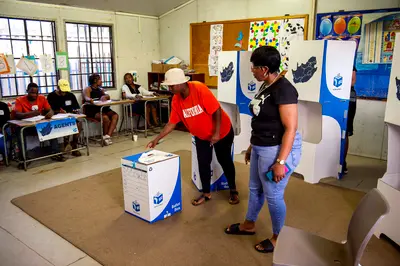
South Africa is seeing a big change after its recent local government elections. Experts suggest the country is becoming a zone where old political ideas do not matter as much as they used to. Voters are now looking for results rather than following a specific party dream.
What happened in the South Africa local government elections?
The recent local government elections showed that people are tired of the same old promises. In the past, parties relied on their history or big ideas to get votes. Now, the results show that people are more interested in who can fix the roads and provide clean water. This shift makes the political map look very different than it did ten years ago.
This change is happening in many places, including every local municipality (South Africa) across the provinces. When voters stop caring about labels, small parties and independent leaders have a better chance to win. This means the big parties have to work harder to prove they can actually manage a city or a town. It is no longer enough to just have a famous name or a long history in the struggle for freedom.
Why is South Africa becoming an ideology-free zone?
An ideology is a set of ideas about how a country should be run. For a long time, South African politics was about these big ideas. However, daily life for many people has become difficult because of poor services. When the lights go out or the trash is not picked up, a voter stops caring if a politician is a socialist or a capitalist. They just want the job done right.
This trend has been growing for several years. We can see the start of this frustration if we look back at the 2016 South African municipal elections when major cities began to slip away from the ruling party. Since then, the focus has moved even further toward practical needs. People are voting with their wallets and their daily needs in mind rather than their hearts or their old loyalties.
- Voters want better service delivery in their neighborhoods.
- Political parties are forced to make deals with each other to lead.
- Ideology is being replaced by practical solutions for the poor.
- Smaller parties are gaining power in local councils.
What does this mean for the future of South African politics?
The move away from big ideas means that coalitions will become the normal way to rule. A coalition is when different parties work together because no one won enough votes to lead alone. This can be good because it forces politicians to talk to each other. But it can also be messy if they cannot agree on simple things like a budget or a new project.
Looking ahead, this creates a new path for the country. If the current trend stays the same, the next few years will be a test for every leader. They will have to show they can manage money and staff without letting their political beliefs get in the way. This new era of politics is about being practical and making sure the government works for everyone, not just for a specific group of followers.
How will this change affect ordinary citizens?
For the average person, this shift might lead to better accountability. When a party knows it can lose its spot because the water is dirty, it might try harder to fix the pipes. It puts the power back into the hands of the people who live in the community. They can demand better results and switch their vote if they do not see any improvement in their street or town.
It also means that local leaders will have to be more honest about what they can and cannot do. In an ideology-free zone, there are no excuses based on grand plans for the future. There is only the reality of the present. This makes local government more like a business that must serve its customers well to stay open. People will be watching closely to see if this change actually leads to a better life for all South Africans.
Comments
Post a Comment